
Where to Find a Quiet Sunrise Swim on an Island
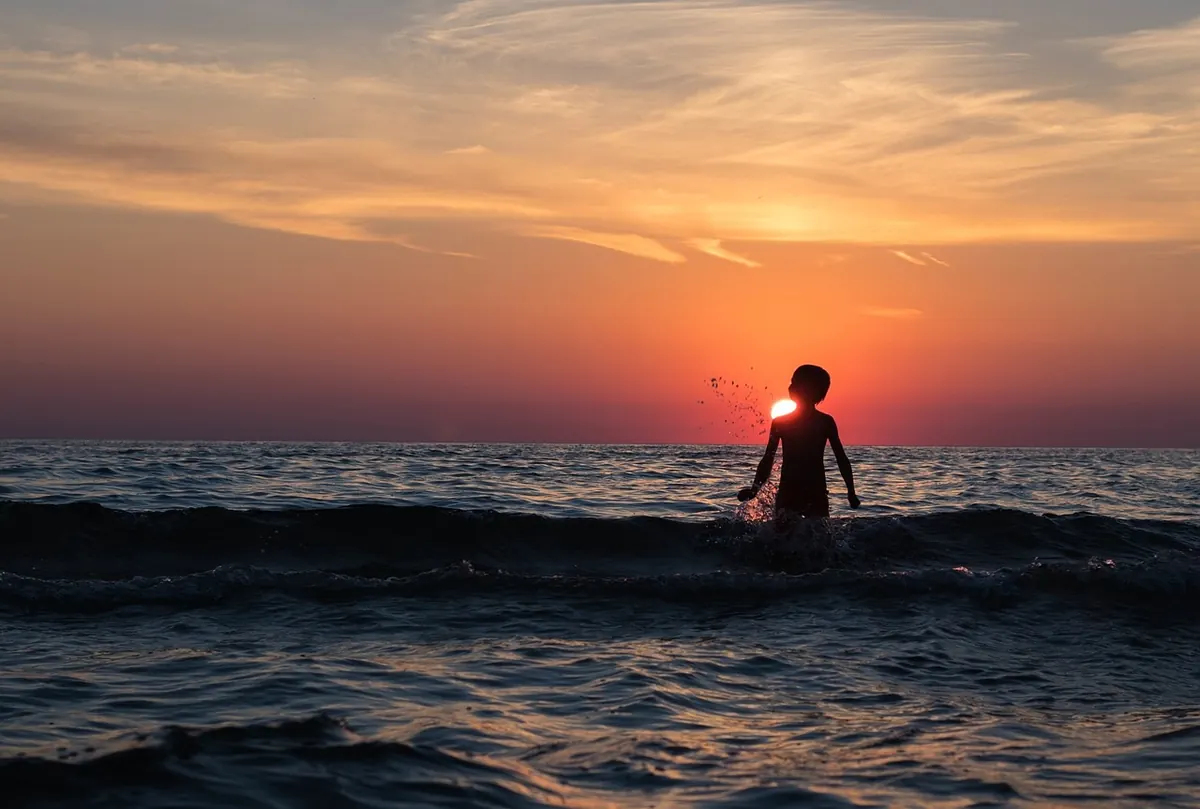
The best swim of a trip rarely happens at noon. It happens at ten past six, when the water is still glass, the sand is cold and unswept, and the only sound is a dinghy rope tapping against a mast. You walk in alone, swim twenty strokes out, turn around, and see the island from the angle it was built to be seen from — before anyone has opened a shutters or dragged a lounger across a terrace.
Finding that spot takes a little homework. Not much. An hour of looking, one early recce, and a bit of restraint about where you park and how loud you are. Here is how to do it properly.
Start With the Map, Then Ignore It a Little
Satellite images are the most useful tool you have, and they cost nothing. Before you go anywhere, pull up the coastline on your phone or laptop and study it the way you would study a trail. You are looking for the shape of the land rather than the names on it.
Zoom in on the details that tell you how a place is used: a single-track road ending near the sea, a scatter of whitewashed houses, a chapel or cemetery on a headland, a scatter of boats pulled up on a concrete slipway. Those markers usually mean a small, working beach with a short walk from the car — the kind of place that empties out by eight in the evening and stays quiet until nine.
Then look for the opposite. Long white ribbons of sand with a hotel behind them, rows of beach umbrellas drawn up like an army, a beach club's pontoons. Beautiful, yes, but they are also where the cleaning tractors start early and the first sunbed stacker arrives before seven. On an island trip, the map tells you which beaches belong to the afternoon and which belong to the dawn.
Scout at the Wrong Time of Day
Never make your first visit at sunrise. Go the day before, in the middle of the afternoon or at low tide, and walk the spot properly. You want to answer a few blunt questions.
- How do you actually get in? Sand is easy. Pebbles are fine with sandals. A rock shelf with a two-foot drop and weed on it is not a place to discover in the half-dark.
- Where does the sand end? Low tide can reveal a wide flat beach that disappears entirely by nine in the morning. Note how far the wet line reaches.
- What is underfoot further out? Sea urchins, sharp limestone, an old mooring block. Anything you would want to know before your feet do.
- Where does the beach empty out? Look for the corners without paths, the far end beyond the last set of steps. That is where the quiet is.
- Is there an exit if the water moves you along? Currents run parallel to shore. Know where the next set of steps or the next sandy ramp is.
While you are there, look at the sand for glass, the path for loose stone, and the roadside for the shape of a plausible parking spot that will not block a gate at six in the morning.
Read the Water Before You Read the Sky
Sunrise light is lovely and almost entirely irrelevant to whether a swim is safe. The two things that matter are tide and wind, and both are easier to judge than most people think.
Tide
Find the local tide table — harbour offices, fishing shops, and noticeboards near marinas usually carry one, and tide apps work offline once loaded. A falling tide on a gently sloping beach gives you a wide, shallow, warm entry and a long walk back. A rising tide can cut off a rock shelf or a sandbar in under an hour. On a strange coast, swim on a rising tide only if you have plenty of beach behind you and no headland at your back.
Wind and swell
Look for the sheltered side of the island. If the forecast shows a steady breeze from the north, the southern coves will be flat while the northern ones are slapping against the rocks. On the morning itself, stand and watch for two full minutes before you get changed. If white water is breaking further out than seems reasonable, or the surface is choppy in a way that makes you hesitate, that hesitation is worth listening to. There will be another morning.
One sensible rule: if you are not confident about your swimming, or the entry looks uncertain, swim where someone else is around and can see you, and ask locally — a harbour office, a dive shop, a fisherman mending nets will all tell you more in two minutes than a guidebook will in two pages.
Access Is a Relationship, Not a Right
Most island coastlines are a patchwork of public beach, private land, farmland and paths that exist because someone's grandfather kept them open. A few habits keep it that way.
Park where you cause no obstruction — not across a field gate, not in front of a bin, not on the verge where a tractor needs to turn. If a path runs past a house, keep your voice down and your torch pointed at your feet rather than at the windows. If a gate is closed, close it again. If a sign says private, believe it and walk another ten minutes; there is almost always another way in.
And if you meet the person whose land you are crossing at six in the morning, say good morning. It is remarkable how much access survives on that alone.
Quiet Has a Volume
Sound travels oddly over water. A normal conversational voice at the shoreline can be perfectly clear to someone three hundred metres offshore, and a car door closing carries further than you would believe. Early mornings are when residents hear everything.
So: no music from a speaker, however quietly you think it is playing. Use headphones if you must have something. Close car doors with your hand rather than letting them swing. Keep the dog on a lead on the path and off the beach if there are birds nesting — dawn is prime feeding time on a shoreline. Leave the drone at home; few things annoy a quiet cove faster. And when you leave, leave the sand as you found it, which is to say without a towel print and without the bottle cap you dropped in the dark.
A Shortlist for Choosing the Spot
When you have two or three candidates, rank them like this:
- Walking distance from the road beats a drive-and-hike, at least on the first morning. You want a swim, not an expedition.
- Shelter beats beauty. A slightly plainer cove on the lee side will be swimmable far more often than a dramatic one facing the swell.
- A sandy or pebbled entry beats a rock shelf at dawn. Save the dramatic entries for a midday swim with company.
- Somewhere with a visible house or a moored boat nearby beats total isolation, especially if you are swimming alone.
What to Carry, What to Leave Behind
A small bag does the job: sandals, a quick-dry towel, a dry bag for phone and keys, water, and a headlamp or a phone torch for the walk in. Take a light layer for the ten minutes afterwards. Leave behind the speaker, the glass, the drone, and anything you would have to shout about.
A Five-Minute Plan for Tomorrow Morning
Tonight, check the tide table and the wind direction for the first two hours of daylight. Pick your spot from the shortlist and note the walk from the car. Charge your torch. Put a bottle of water by the door. Set the alarm fifteen minutes earlier than feels necessary, because everything at dawn takes longer than you expect — the drive, the path, the standing and staring.
Then go, swim, and be back at the café when it opens. By the time the first umbrellas are being dragged across the sand, you will have already had the best hour of the day.
Photo: StockSnap / Pixabay